
Latest market
 SUS316L stainless steel plate
2024-01-29
 Cold rolled X6CrNiSiNCe19-10 stainless s
2024-01-29
Recommended news
 Material of stainless steel pipe fitting
2024-01-29
 Environmental impact on stainless steel
2024-01-29

What are the surface conditions of stainless steel? |
Publisher: Jiangsu Yushan Metal Technology Co., Ltd | Hits: 817 | Published on: 2024-1-29 12:04:17 | Close |
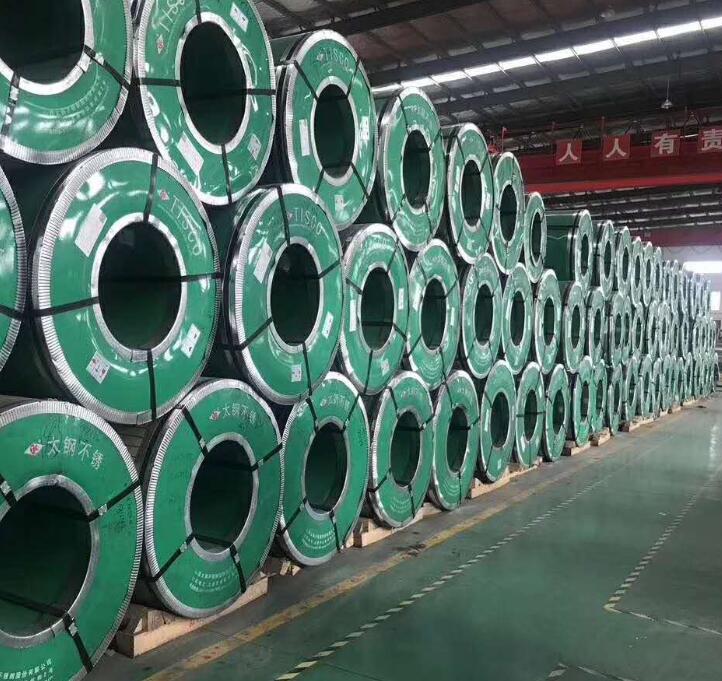
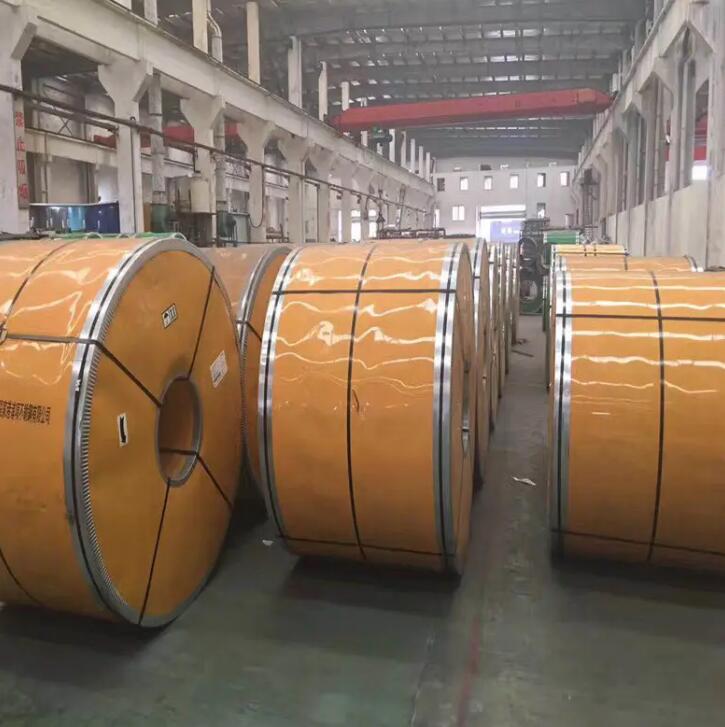
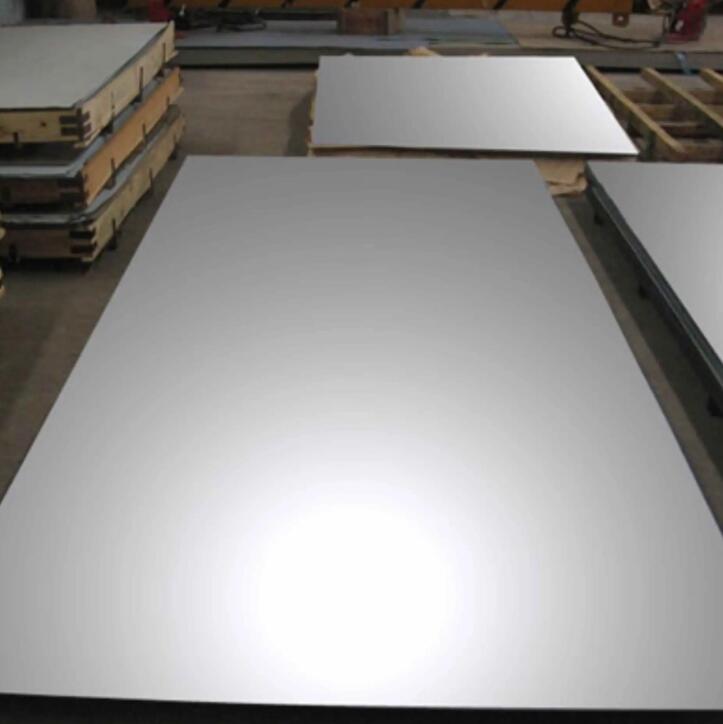
| Stainless steel has unique strength, high wear resistance, superior anti-corrosion performance, and is not prone to rusting. Stainless steel materials are widely used in various industries, such as food machinery, electromechanical industry, home appliance industry, and decoration. The development prospects of stainless steel are broad, and the application and development of stainless steel to a certain extent depend on the development of its surface treatment technology. With the development of the industry and market, the demand for stainless steel surfaces is showing a trend of diversification and refinement. There are various types of stainless steel surfaces, each with its own representation method. The following is a representation method and related introduction of the surface state of stainless steel compiled by Lishun Stainless Steel. NO.1 Silver white, a rough, matte surface that is hot-rolled to a specified thickness and then annealed and descaled, suitable for applications that do not require surface gloss. NO.2D silver white, undergoes heat treatment and acid washing after cold rolling, and sometimes undergoes a final light rolling on the rough surface roller, which is a matte surface processing. 2D products are used for applications with less stringent surface requirements, including general materials and deep drawing materials. 2B has a stronger luster than NO.2D. After 2B treatment, it undergoes a final light cold rolling with a polishing roller to obtain an appropriate gloss. This is a commonly used surface machining, which can also be used for polishing. BA is as bright as a mirror, without standards, but it is usually a surface treatment with bright annealing and high surface reflectivity. Commonly used in building materials, kitchen equipment, etc. NO.3 rough grinding, obtained by grinding materials such as NO.1 and 2B with 100-200 # abrasive belt roughness units. Commonly used for decoration, kitchen utensils, etc. NO.4 intermediate grinding uses a 150-180 # grinding belt to grind materials such as NO.1 and 2B, resulting in a polished surface. This is a universal, glossy surface with visible "grains" that have a certain degree of mirror reflection. Commonly used in mechanical equipment frames, elevator cars, various tank bodies, etc. The surface obtained by grinding materials such as NO.1 and 2B with a 240 # grinding belt for fine grinding of NO.240. The surface obtained by grinding materials such as NO.1 and 2B with 320 # grinding belt using No.320 ultra-fine grinding. NO.400 has a luster similar to that of BA's NO.2B material, which is commonly used for grinding with a 400 # polishing wheel. HL hair line grinding is performed on grinding materials with appropriate particle sizes for hair line grinding (150-240 #). NO.7 is similar to mirror polishing, using a 600 # rotary polishing wheel for grinding. Used for art and decoration. The bright mirror state obtained by repeated grinding with a polishing wheel for 8K mirror grinding. Special equipment inner and outer walls, decorative decoration, etc. |



 Scan
Scan